
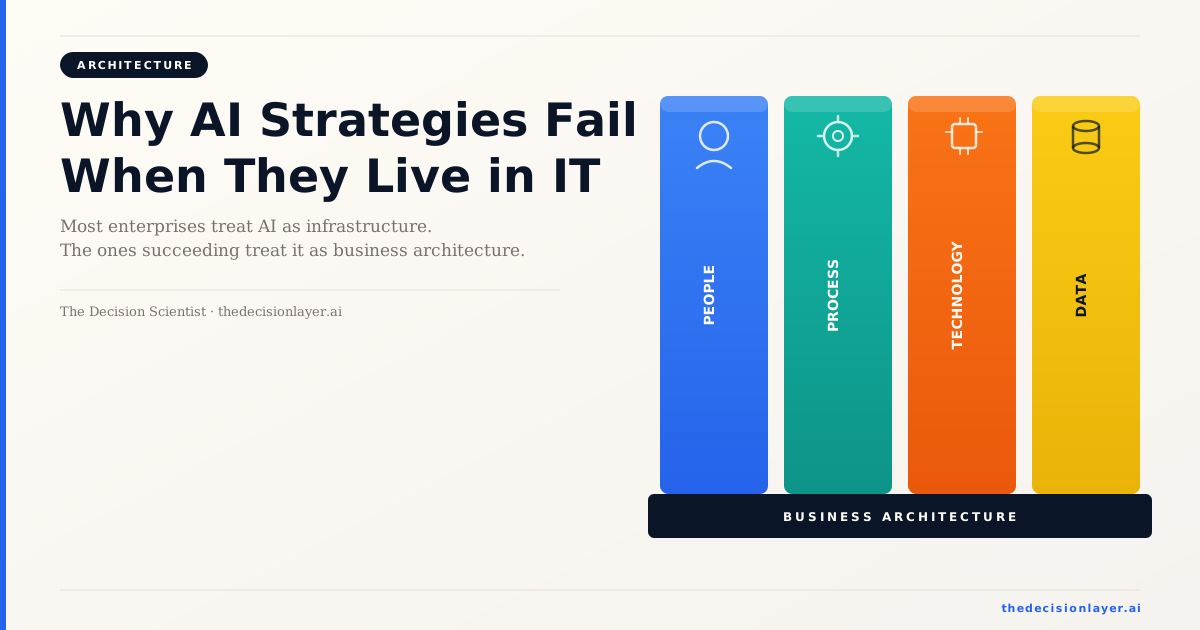
Why AI Strategies Fail When They Live in IT
TL;DR
AI is a decision-making capability, not infrastructure — treating it like cloud or ERP means it gets managed as a cost to optimise, not a strategic assetWhen AI lives under IT budget, it competes with servers and security for funding and gets measured against uptime and cost metrics instead of business outcomesAI-native companies (BYD, Shopify, Nubank) don't run "AI initiatives" — they embed machine intelligence into how every operational decision gets madeThe productive question isn't "What AI should we deploy?" but "Which decisions could be fundamentally different with machine intelligence?"
The Category Error
When AI gets classified as infrastructure, a cascade of consequences follows:
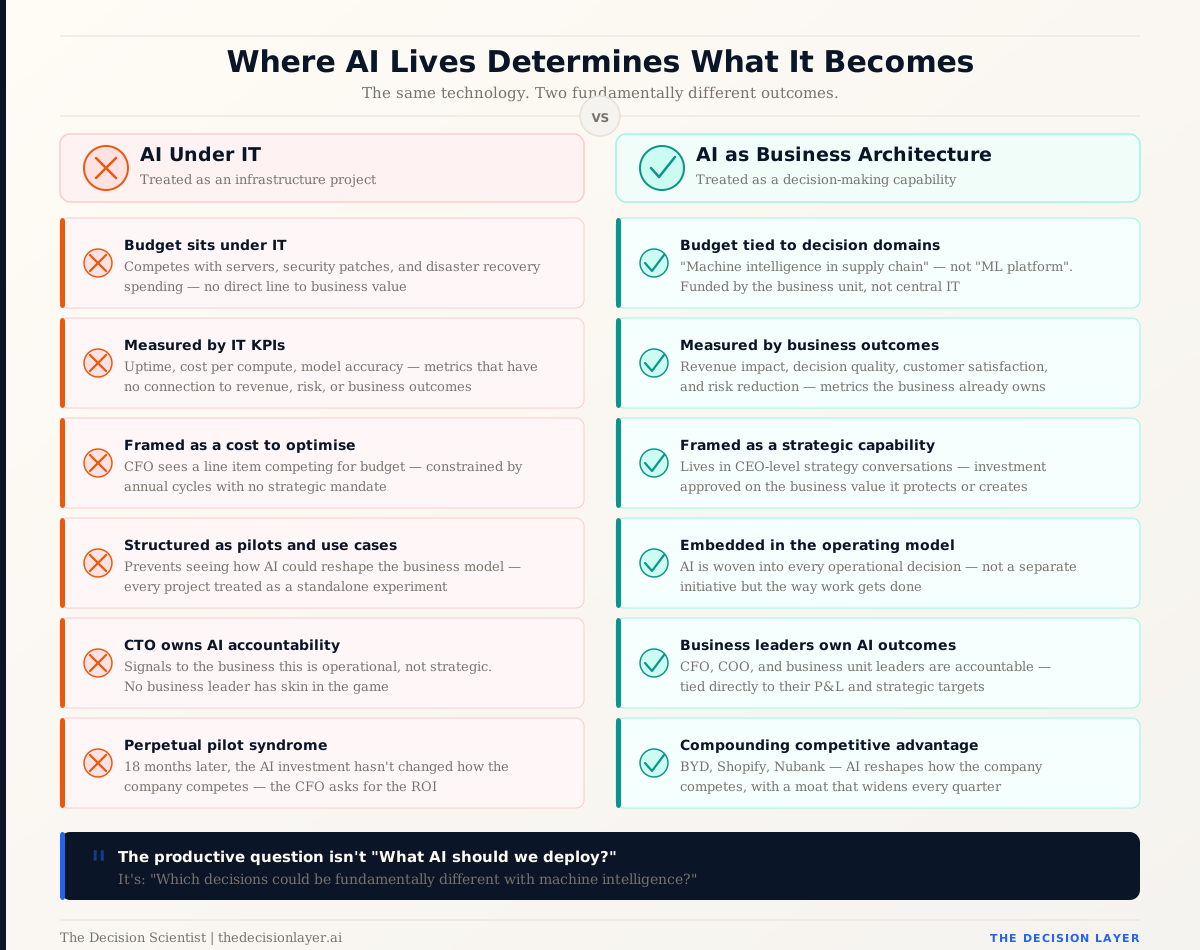
- Framed as a cost to optimise rather than a revenue driver or business capability
- Placed under IT budget, where it competes with servers, security patches, and disaster recovery
- Structured as "pilots" and "initiatives" rather than as operating model changes
- Measured against IT KPIs: uptime, deployment speed, cost per inference
- Staffed with ML engineers reporting to infrastructure teams, disconnected from business unit strategy
The result? AI becomes what IT does, not what the business becomes.
What Distinguishes AI-Native Organisations
BYD, Shopify, and Nubank operate fundamentally differently. They don't run "AI initiatives" — they embed machine intelligence into the operating model itself.
- AI decisions are made where business decisions are made, not in a separate technology backlog
- Accountability for AI outcomes is attached to business unit leaders, not infrastructure teams
- The budget line reflects strategic intent: "machine intelligence in underwriting" not "ML platform"
- Measurement is against business outcomes: conversion rate, risk reduction, customer satisfaction
The Budget Line as Strategic Signal
What the CFO cannot see from the budget:
- Whether AI is treated as a capability or a cost
- Whether accountability sits with business units or in an isolated tech function
- Whether decisions are being made with or without machine intelligence
What companies that made it work did:
- Allocated budget to decision domains, not to a technology function
- Tied funding to business outcomes, not infrastructure metrics
- Made the budget holder a business leader, not the CTO
Reframing the Question
Consider a manufacturing company deciding how to reduce defect rates. The traditional question: "What AI should we deploy?" This invites a technology conversation. The productive question: "Which decisions that currently drive defect rates could be fundamentally different if we embedded machine intelligence?"
The difference in framing:
- Technology-first: "Deploy a defect detection model"
- Decision-first: "Where in the production line are decisions made on incomplete information? Can machine intelligence reduce that incompleteness?"
Practical Steps
- Audit your budget lines: Where does "AI investment" appear? Under IT? Or under business units?
- Identify decision-critical processes: Which decisions directly impact revenue, risk, or customer experience?
- Assign accountability: Who owns the outcome if machine intelligence improves this decision?
- Measure business outcomes: Set KPIs on the decision, not on the model. Accuracy matters only insofar as it changes the decision.
The sorting happens at the architecture level. Where AI lives in the org chart, how it is budgeted, and what it is measured against all signal whether it will become a core capability or remain a perpetual pilot.
The Decision Scientist explores how organisations build, scale, and govern machine intelligence capabilities. Through research and case studies, we examine the architecture, incentives, and human systems that distinguish AI-native organisations from those still experimenting with pilots.
Subscribe to The Decision Layer — Get insights on AI architecture, governance, and decision-making directly to your inbox.